
Beach soccer is a popular sport across globe. It has grown from a simple, informal game played on the beaches of Rio de Janeiro into a global sport. It has a world federation, competitions, passionate fans, and official support from FIFA. Today, beach soccer is played in over 100 countries. It is organized by Beach Soccer Worldwide, the global governing body responsible for hosting major events, setting rules, and advancing the sport.

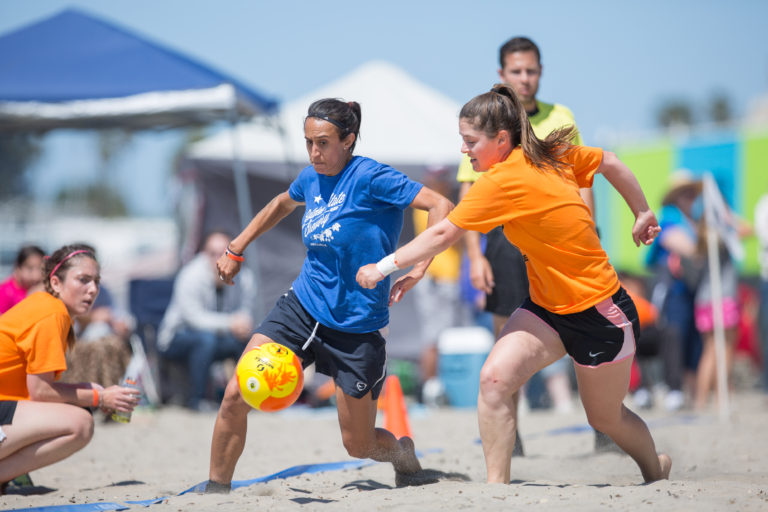
What started as a fun way for local players to pass time on the sand evolved into a fast-paced, high-scoring variation of the beautiful game. With a smaller field on sand, five players per team, unlimited substitutions, kick-ins instead of throw-ins, and no shoes allowed, this game moves at a fast pace and rewards creativity, control, and fast decision-making.
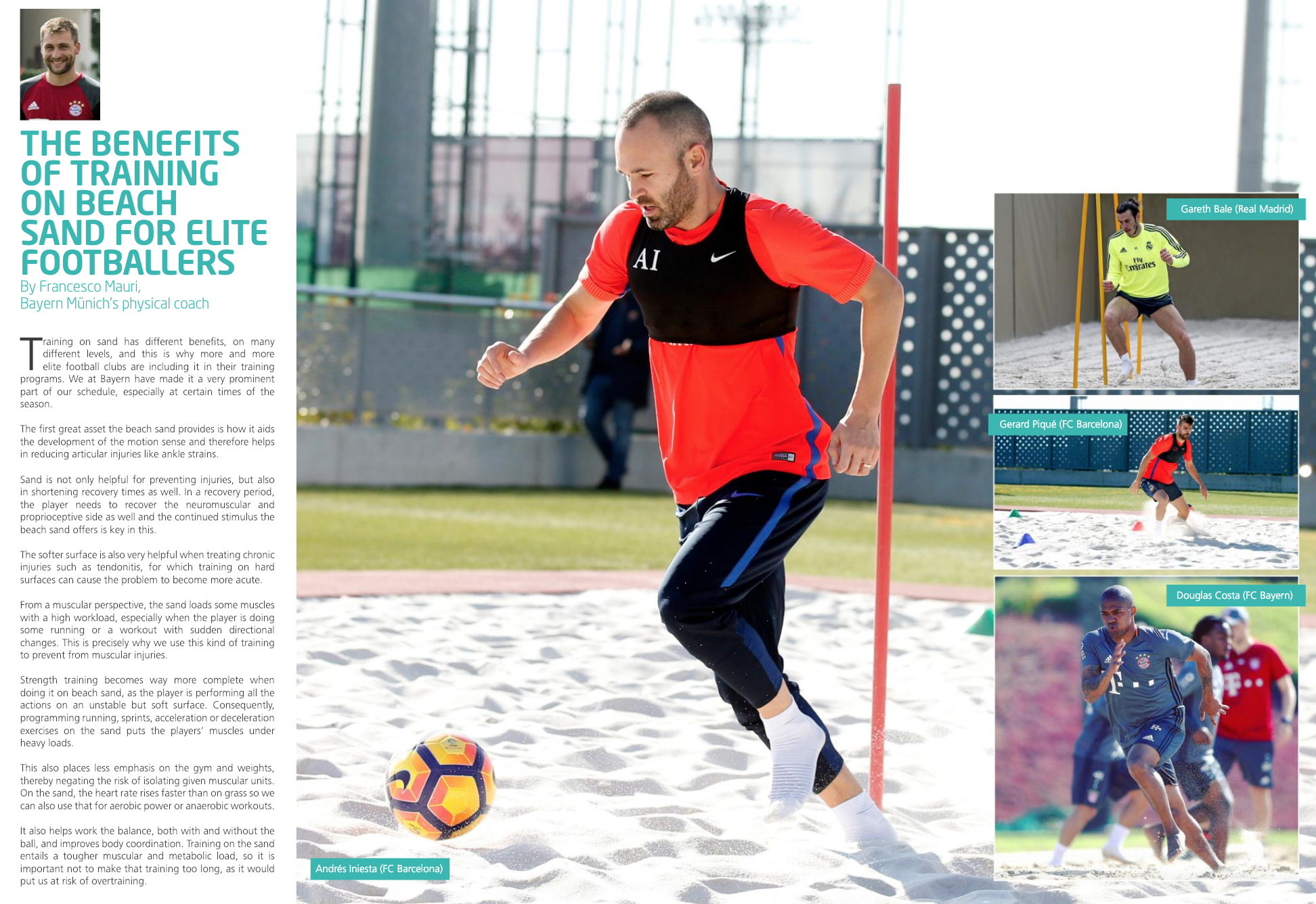
Although beach soccer is a sport on its own, it also offers powerful performance benefits for players at every level of the game, from youth to professional. This can be ultimately seen in its use at clubs including Bayern Munich and Real Madrid. Beach has helped players like Neymar, Ronaldino, Beckham, Bale, and many other household names. Below are the nine most important benefits that make beach soccer an excellent training tool for players of all levels.
What are the main Benefits of Playing Beach Soccer?
Improved ball control and first touch
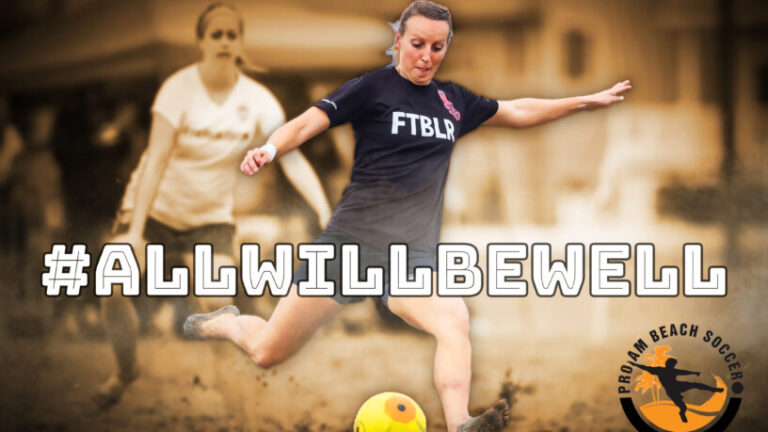
Because beach soccer is played barefoot, players receive much more sensory feedback from the ground, which improves touch and ball control differently compared to wearing cleats. The unstable sand surface also forces constant micro-adjustments, which sharpens a player’s first touch. As Ko Ishikawa, a Professional Japanese Coach, has said, “Beach Soccer is not only the most technical, but also the most tactical of all forms of the beautiful game”.
Research on sand-based training shows that increased proprioception and neuromuscular activation are both linked to better ball control.
Increased lower-body strength
Everyone who has run on sand knows that it is much more tiring than running on grass because the surface absorbs force, since you sink in, instead of returning it. This extra resistance forces the legs to work harder with every sprint, jump, and change of direction, naturally building strength in the lower legs.
Research comparing sand and grass training shows significant improvements in sprint performance and lower-body power after sand-based conditioning.
Greater aerobic and anaerobic conditioning
Since running on sand requires more energy than running on firm ground, players naturally increase their heart rate faster and work harder during every movement. This increased effort improves both aerobic endurance and anaerobic power in a shorter amount of time compared to traditional grass training.
Plenty of sports science research shows that athletes training on sand improve their cardiovascular capacity and sprint recovery more effectively than those training on grass.
Better balance, coordination, and core stability

In addition to absorbing force instead of returning it, the constantly shifting surface of the sand forces players to stabilize through their ankles, hips, and core with every step, which improves overall body balance and coordination. Training barefoot or in socks also increases sensory feedback, which strengthens proprioception and helps players move more efficiently.
Studies on sand-based plyometrics demonstrate that athletes develop better balance and explosive control than when performing the same exercises on grass. It also shows that the negative impact on the body is less than the hard surface. Repetition and the recovery is much quicker from said exercises in sand.
Faster decision-making in a high-paced environment
In beach soccer, time and space are extremely limited. Due to a smaller field size, so players are constantly challenged to make quicker decisions under pressure. This small-sided environment strengthens a player’s ability to recognize patterns and respond immediately. This enhances instincts to any situation on the field.
Evidence from small-sided game research shows that reduced space and higher tempo can improve reaction time, scanning frequency, and decision-making accuracy.
Helps with injury prevention
One of the most overlooked benefits of beach soccer is how playing barefoot strengthens the feet and fascia. It improves overall body control and reduces the risk of injuries. Training directly on the sand also provides grounding therapy. It is a natural healing technique shown to reduce inflammation, lower stress, and support overall recovery. This allows the body to absorb the Earth’s free energy in the form of free electrons. This is especially evident in female athletes, who benefit from strength training to help prevent knee injuries. Such injuries are more common among women than men. It is largely due to anatomical and biomechanical differences such as a wider pelvis and increased Q‑angle. This can place greater stress on the knees especially on hard and turf surfaces.
On top of grounding, when you’re at the beach, you’re also typically exposed to sunlight, fresh air, and a calm natural environment, all of which help boost circulation, improve mood, and overall physical resilience.
Boosted creativity and mental well-being
Playing beach soccer in an open, natural environment encourages players to experiment more with skill moves, improvisation, and attacking ideas. This boosts creativity in ways that traditional soccer sometimes cannot. The combination of sunlight, fresh air, and the calming sound of the beach reduces stress levels. It supports a healthier mindset, which can also improve confidence and enjoyment while playing.
Studies on outdoor training environments show that athletes who train in nature experience improved mood, lower anxiety, and better overall mental well-being.
Conclusion
To summarize, beach soccer is much more than a fun variation of the beautiful game. It is a powerful training tool that helps players develop elite-level technical skills, physical strength, and mental sharpness. The combination of sand resistance, barefoot training, and a fast-paced playing environment challenges players. This happens in ways that the traditional game simply cannot.
On top of that, the grounding effect of the sand, natural sunlight exposure, and training in an outdoor beach environment support better recovery. It also reduces stress, and enhances overall well-being. It makes beach soccer the most complete and beneficial forms of training any player can add to their weekly routine.